
- Informations
The 10 best Trail for Trekking in Nepal
Nepal's top 10 trekking trails blend towering Himalayan peaks, ancient villages, and rich culture—from Everest Base Camp to Annapurna Circuit.

- Published
- Updated
- Read time
- 10min
Table of Contents20
Nepal: The Definitive Compendium of Premier Trekking Expeditions
Nepal remains the preeminent global destination for mountaineering and alpine trekking, a Himalayan sovereign state whose identity is inexorably linked with high-altitude adventure. From the storied ascent to Everest Base Camp to secluded valleys preserving centuries of Buddhist heritage, the nation offers an unrivaled spectrum of pedestrian exploration. Whether seeking a focused excursion or an extended odyssey, travelers are guaranteed profound encounters with the planet’s most formidable topography and enduring cultural traditions.
This comprehensive analysis delineates Nepal’s most distinguished trekking routes, providing the requisite technical guidance regarding regulatory compliance, optimal seasonality, and logistical preparation.
Everest Base Camp Trek
The Preeminent Himalayan Pilgrimage
Distance: Approximately 130km
Duration: 14–20 days
Difficulty: Moderate to challenging
Accommodation: Teahouse lodges
The Everest Base Camp expedition represents the global benchmark for alpine trekking, attracting an international cohort of adventurers to the base of the world’s highest peak. The itinerary commences with a technically demanding arrival at the Lukla mountain airstrip before traversing the Sherpa heartland within the Solukhumbu region. The route facilitates passage through significant settlements, including Namche Bazaar—the commercial epicenter of the Khumbu—and Tengboche, which hosts a significant monastery offering panoramic vistas of the massif.
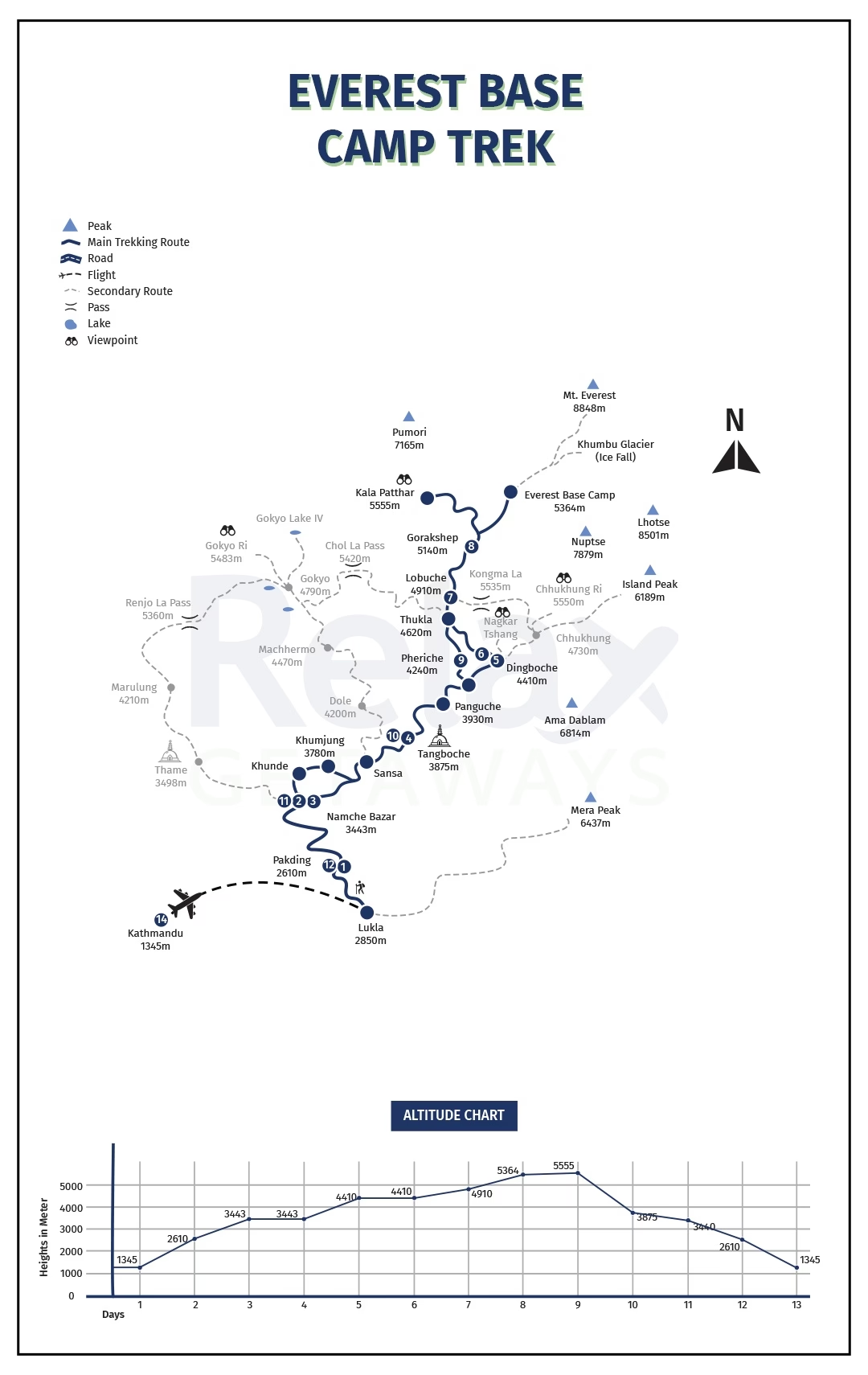
The circuit provides an immersive engagement with Sherpa traditions and unparalleled perspectives of Mount Everest (Sagarmatha) and its surrounding eight-thousanders. A sophisticated network of teahouse lodges supports the route, though trail density increases significantly during the autumn peak. Discerning trekkers seeking relative seclusion may consider the Gokyo Lakes variant or the rigorous Three Passes Trek as alternative vantage points of the Khumbu landscape.
Annapurna Circuit
An Odyssey Through Transitional Biomes
Distance: 160–230km
Duration: 10–17 days
Difficulty: Moderate to challenging
Accommodation: Teahouse lodges
The Annapurna Circuit remains a quintessential alpine experience, lauded for its geographic and ecological diversity. The trail navigates through profound gorges and verdant valleys before ascending to arid, high-altitude plateaus, traversing territories inhabited by Gurung, Manangi, and Thakali communities. The expedition’s technical climax is the Thorong La Pass (5,416m), which marks the transition from the lush sub-tropical foothills to the stark aesthetic of the
Trans-Himalayan plateau.
Originating from the lakeside enclave of Pokhara, the circuit features well-established infrastructure and sites of significant religious import to both Hindu and Buddhist pilgrims. Despite ongoing infrastructure development in the lower reaches, the circuit remains a cornerstone of Asian trekking. For those requiring extended immersion, the Nar and Phu Valley detours provide sophisticated extensions to the primary route.
Manaslu Circuit
The Discerning Alternative to Established Corridors
Distance: Approximately 180km
Duration: About 16 days
Difficulty: Strenuous/ Challenging
Accommodation: Teahouse or camping
For trekkers prioritizing solitude over established amenities, the Manaslu Circuit offers a rigorous, less-traversed alternative to the Annapurna and Everest regions. The trail circumnavigates the world’s eighth-highest peak, Mount Manaslu (8,163m), offering a gradient of environments from subtropical rainforests to alpine passes. This route is distinguished by its pristine natural state and villages that maintain a traditional equilibrium largely unaffected by mass tourism.
The Manaslu region is characterized by restricted-access regulations, necessitating heightened logistical oversight. The remote nature of the terrain, coupled with the crossing of the Larkya La Pass (5,160m), requires substantial physical conditioning and self-reliance. However, for the experienced trekker, this circuit provides an authentic wilderness engagement that is increasingly rare in the contemporary Himalayan context.
Annapurna Sanctuary
Proximate Alpine Grandeur
Distance: Approximately 115km
Duration: 10–14 days
Difficulty: Moderate to challenging
Accommodation: Teahouse lodges
The Annapurna Sanctuary expedition penetrates a formidable natural amphitheater situated north of Pokhara, bounded by an array of glaciers and high-altitude peaks. This elevated glacial basin serves as the focal point of a sophisticated teahouse trek that offers some of the most immediate mountain perspectives available in Nepal.
The itinerary traverses Gurung settlements and terraced agricultural landscapes before ascending into dense rhododendron and bamboo forests. Given its popularity, the sanctuary experiences high traffic during the primary trekking windows. Winter expeditions offer a distinct, snow-clung aesthetic, though such endeavors require specialized cold-weather provisions and experience.
Ghandruk Loop
A Sophisticated Short-Duration Excursion
Distance: Approximately 25km
Duration: 3 days
Difficulty: Easy
Accommodation: Teahouse lodges
For novice trekkers or professionals with limited temporal availability, the Ghandruk Loop provides an elegant introduction to the Nepali highlands. Commencing from Pokhara, the route winds through terraced rice fields and expansive rhododendron forests. Lodging options range from traditional teahouses to premium mountain retreats, catering to a diverse range of preferences.
Sharing its initial stages with the Annapurna Sanctuary route, the loop offers consistent mountain vistas. Its moderate elevation facilitates year-round accessibility, including winter, making it an ideal selection for those seeking the Himalayan aesthetic without the logistical commitment of a high-altitude expedition.
Langtang Valley
The Premier Week-Long Alpine Experience
Distance: 65–80km
Duration: 7–8 days
Difficulty: Moderate
Accommodation: Teahouse/ lodges
The Langtang Valley expedition provides a concentrated alpine experience in proximity to Kathmandu, accessible via ground transport. This logistical advantage significantly mitigates the carbon footprint and costs associated with domestic mountain flights. The trail ascends from Syabrubesi through diverse biomes, culminating in views of high peaks and significant glacial formations.
The valley’s topography is reminiscent of the European Alps but maintains an unmistakably Himalayan character. For those wishing to expand the itinerary, the ascent to the sacred Gosainkunda Lakes (4,400m) offers a significant cultural and spiritual dimension. The region is also a sanctuary for rare fauna, including the Himalayan black bear and the red panda.
Tamang Heritage Trail
The Preeminent Cultural Immersion
Distance:Approximately 55km
Duration: About 6 days Difficulty: Moderate
Accommodation:Teahouse/ homestay
While the majority of Nepal’s routes emphasize topography, the Tamang Heritage Trail prioritizes ethnographic engagement while maintaining scenic integrity. This circuit, originating in Syabrubesi, traverses the hills north of Langtang, connecting several traditional Tamang settlements.
The emphasis on homestay accommodation facilitates a deep understanding of Tamang heritage and their historical Tibetan lineage. The presence of ancient monasteries and sacred monuments along the trail elevates the experience from a mere trek to a cultural pilgrimage, providing an intimate perspective often lost on more commercialized routes.
Kanchenjunga Base Camp
The Zenith of Wilderness Exploration
Distance: Approximately 220km
Duration: 14–28 days
Difficulty: Challenging
Accommodation: Teahouse or camping
Nepal’s eastern frontier, bordering the Indian state of Sikkim, remains one of the country’s most pristine and demanding trekking zones. The expedition to the base of Kanchenjunga—the world’s third-highest peak—is characterized by its isolation and requires meticulous organizational planning.
The route provides access to both the northern and southern base camps, traversing uninhabited valleys and high-altitude montane forests. The logistical requirements include crossing significant passes to achieve vistas of the Kanchenjunga massif. This represents wilderness trekking in its most authentic and rewarding form, suitable for those seeking a profound disconnect from modern infrastructure.
Great Himalayan Trail
The Pinnacle of Long-Distance Trekking
Duration: 50–160 days
Difficulty: Extremely challenging
Accommodation:
Teahouse and camping
For the elite trekker, the Great Himalayan Trail (GHT) represents the ultimate mountaineering achievement—a continuous traverse across the entire Nepali Himalaya. This initiative was established to promote sustainable tourism in remote communities by encouraging exploration beyond the primary trekking hubs.
For the truly dedicated, the Great Himalayan Trail represents the ultimate challenge—a journey along the entire length of the Nepali Himalayas . This once-in-a-lifetime route was designed to encourage trekkers to venture beyond established paths and distribute tourism benefits to remote communities.
The GHT offers two primary modalities: the High Route, which navigates remote ridges and passes exceeding 5,000m, and the Low Route, which emphasizes cultural immersion in the foothills. Executing the entire traverse in a single season is a significant logistical feat; consequently, many professionals choose to complete the route in stages over multiple years.
Nagarkot to Dhulikhel
The Premier Short-Duration Hike
Distance: Approximately 20km
Duration: 1-2 days
Difficulty: Easy
Accommodation: Homestays/ Village hotels
The periphery of the Kathmandu Valley offers accessible trails suitable for day excursions, reachable via private or public transport from the capital. A notable route connects the ridge settlement of Nagarkot with the historic Newari town of Dhulikhel, both celebrated for their commanding Himalayan panoramas, particularly during the dawn hours.
This section integrates into the broader Kathmandu Valley Cultural Trekking Trail and may be augmented with visits to Panauti—a site of profound antiquity—and the Namobuddha monastic
complex. The absence of national park fees or permit requirements makes this the most streamlined trekking option within the region.
Best Seasons for Trekking in Nepal
Autumn (October–November): The Optimal Window
This period is characterized by post-monsoon atmospheric clarity and stable temperatures, making it the preferred season for high-altitude trekking. October represents the zenith of visibility, though it coincides with maximum trail density. November offers continued clarity with reduced traffic as the seasonal cooling begins.
Spring (March–April): Flora and Moderate Temperatures
Spring is the secondary peak season, noted for the flowering of rhododendron forests and the reopening of high passes. While atmospheric haze may slightly diminish clarity compared to autumn, the moderate temperatures are conducive to extended itineraries.
Winter (December–February): High Clarity and Seclusion
Winter trekking rewards the prepared traveler with exceptional clarity and significant solitude. While high-altitude passes may be inaccessible due to snowfall, the Base Camp routes for Everest and Annapurna generally remain viable for those with specialized gear.
Monsoon (June–September): The Rain-Shadow Strategy
While the monsoon affects the majority of the country, the rain-shadow regions of Upper Mustang and Dolpo remain dry. These areas offer excellent trekking potential during the summer months when other regions are obscured by clouds and precipitation.
Essential Packing and Preparation
Technical Gear and Preparation
Procuring professional-grade equipment is fundamental. It is recommended that trekkers bring well-tested footwear from established brands to ensure comfort and durability. A comprehensive layering system, including high-wicking base layers, high-fill down insulation, and GORE-TEX or equivalent shells, is essential for thermal regulation.
Sleeping bags should be rated for sub-zero environments (-10°C minimum for high altitude). Furthermore, environmental responsibility is prioritized through the use of advanced water filtration systems to mitigate the impact of plastic waste in protected zones.
Porter Hire and Responsible Trekking
The engagement of local porters supports regional economies and enhances the trekker’s experience by reducing physical burden. Professional agencies ensure that support staff are appropriately equipped, insured, and compensated. It is incumbent upon the trekker to ensure that load weights remain within ethical and regulatory limits.
Acute Mountain Sickness (AMS)
Acute Mountain Sickness (AMS) is a critical consideration above 2,500m. Mitigation strategies include a conservative rate of ascent, adequate hydration, and strategic acclimatization days. The established protocol mandates an elevation gain of no more than 500m per day for sleeping. Immediate descent is the only definitive response to persistent symptoms.
Final Thoughts
Nepal provides a spectrum of trekking experiences, from refined day walks in the Kathmandu Valley to elite expeditions across the high Himalaya. The national infrastructure is world-class, offering a balance of traditional hospitality and sophisticated logistics.
Whether pursuing the technical challenge of Everest or the cultural depth of the Tamang Heritage Trail, every itinerary promises a transformative experience. Through professional preparation and a commitment to sustainable practices, travelers can engage with the Himalayan landscape while contributing to the preservation of the communities that define it.